Understanding the Hugo Area Market
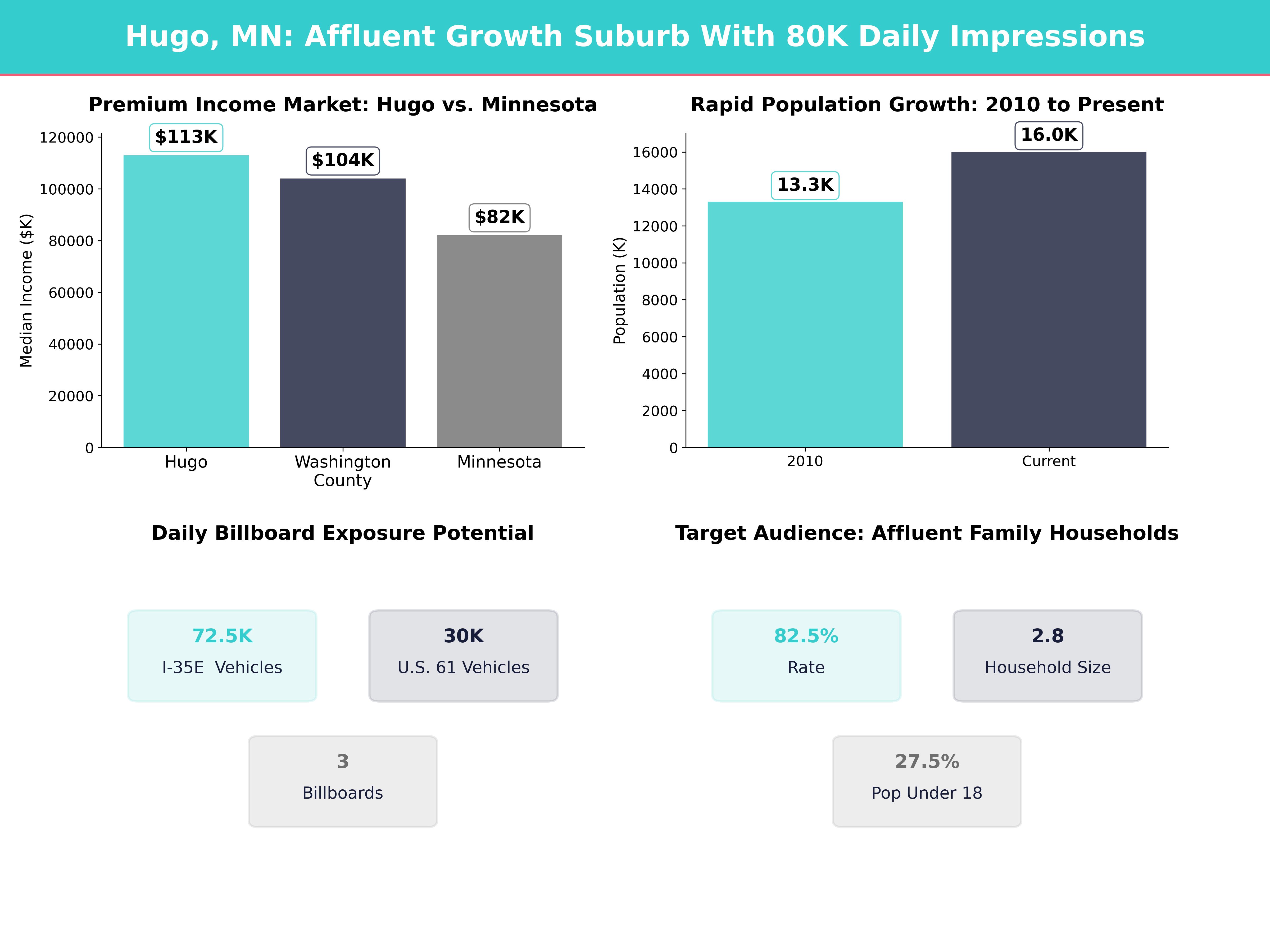
Hugo is one of the Twin Cities’ notable growth suburbs. According to recent local estimates summarized by the City of Hugo, the city has a population of roughly 16,000 residents, up from about 13,300 in 2010—an increase of more than 20% in just over a decade, and more than double its population in the early 2000s. That growth is fueled by new housing developments and families seeking more space while staying within commuting distance of the core Twin Cities, making Hugo billboards a natural fit for reaching new residents as neighborhoods expand.
Key local characteristics that inform billboard strategy:
These factors combine to make the Hugo area especially attractive for:
- Local service providers (home services, health care, financial services, child care)
- Regional retailers and restaurants
- Recreation and entertainment destinations
- Real estate and homebuilding
- Education and extracurricular activities (dance studios, sports clubs, tutoring, etc.)
Our digital billboards near Hugo let us reach these audiences at key daily touchpoints—commuting, shopping, and recreation—while staying flexible on budget and timing. For advertisers looking into billboard rental near Hugo, these characteristics mean each impression is hitting a stable, growing, and high-value audience.
Key Traffic Flows and Where Our Boards Fit
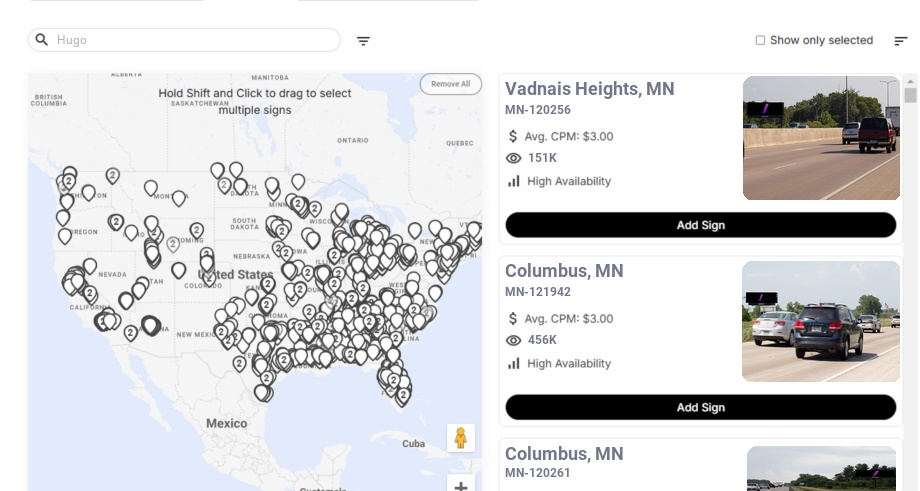
Our 3 digital billboards near the Hugo area are located in Columbus, Minnesota, just under 5 miles away. Columbus is strategically placed along major regional routes, and is home to destinations like Running Aces Casino, Hotel & Racetrack, which draws visitors from across the metro and western Wisconsin. Running Aces alone reports hosting hundreds of thousands of visits annually, with major events and race days significantly increasing corridor traffic and boosting the reach of billboard advertising near Hugo.
Columbus is served locally by the City of Columbus, whose land use and transportation planning emphasizes its role as a regional gateway between the Twin Cities and northern Minnesota lake country.
When planning a campaign, it helps to think in terms of traffic flows rather than city limits:
By understanding these flows, we can use Blip’s daypart and location controls to align impressions with the exact audience patterns that matter most to each campaign.
Demographics and Buyer Personas in the Hugo Area
To maximize relevance, we should shape messaging around specific Hugo-area buyer personas, using the market’s demographic profile. Local school district and county planning documents show that:
- Roughly 25–30% of Hugo’s population is under age 18.
- Around 60–65% of adults are in the prime working ages of 25–64.
- More than 35–40% of adults hold a bachelor’s degree or higher, supporting demand for professional services and higher-end retail.
-
Growing Suburban Families
- Typical profile: Parents in their 30s–40s, 2–3 kids, dual-income, home-owning.
- Income levels: Many households earning $90,000–$150,000+, with a substantial segment above $150,000 in newly built neighborhoods.
-
High interest categories:
- Home improvement (HVAC, roofing, landscaping, remodeling).
- Child-focused services (pediatric care, dentistry, sports programs, tutoring).
- Family dining and entertainment.
-
Strategy:
-
Use friendly, family-oriented imagery and clear value propositions:
- “Keep Your Hugo-Area Home Cozy This Winter – Call [Brand]”
- “After-School Soccer Near Hugo – Sign Up Today”
- Time ads for school commute windows and early evenings (3–7 p.m.). Local districts like White Bear Lake Area Schools and Forest Lake Area Schools typically run school days from roughly 7:30 a.m.–3:00 p.m., creating predictable traffic surges around those times that Hugo billboards can tap into.
-
Commuter Professionals
- A large share of Hugo-area residents work in professional, management, and office roles throughout the metro; Washington County labor data show that 40–50% of employed residents are in management, business, science, and office occupations.
- These commuters are heavy users of smartphones, navigation apps, and online services; in many suburban markets, smartphone adoption exceeds 90% among adults.
-
Strategy:
-
Emphasize convenience, time savings, and quality:
- “Hugo-Area Commuters: 10-Minute Oil Changes Off I-35”
- “Skip Downtown Parking – Park & Ride Near Hugo Area”
- Target heavy commuter times: 6–9 a.m. and 3–6 p.m. on weekdays, when MnDOT peak traffic can be 2–3 times higher than late-night volumes. For service brands, pairing these dayparts with well-placed billboards near Hugo can significantly increase inbound calls and web visits.
-
Outdoor & Recreation Enthusiasts
- The area attracts residents and visitors who prioritize fishing, boating, biking, snow sports, and motorsports. In Minnesota, roughly 56–60% of adults participate in outdoor recreation annually, and northern-suburb residents are often above that average.
-
Strategy:
-
Tie messaging to seasons and vehicles:
- “Gear Up for Ice-Fishing Near Hugo – [Store Name]”
- “ATV & Snowmobile Service on Your Way North”
- Increase bids on weekends and Fridays when recreation traffic peaks—state tourism trend reports show that over half of Minnesota leisure trips occur on weekends.
By matching creatives to these personas, we translate Hugo’s demographic realities into billboard messages that feel “made for” local drivers and make the most of any billboard rental near Hugo.
Seasonality in the Hugo Area and How to Use It
Minnesota’s strongly seasonal climate is a huge advantage for digital billboards because we can rapidly update messaging to match changing conditions.
Winter (December–February)
Average high temperatures near Hugo typically range from the teens to low 30s°F, with lows often in the single digits and seasonal snowfall totals commonly in the 45–55 inch range. This period is powerful for:
- Home services: furnace repair, insulation, snow removal, roof and gutter protection. In cold-climate metros, HVAC and heating service calls can spike 30–50% during extreme cold snaps.
- Auto services: winter tires, remote starters, battery checks—battery-related failures increase sharply once temperatures drop below 20°F.
- Indoor activities: gyms, indoor sports domes, kids’ classes, casinos, and entertainment venues like Running Aces in Columbus.
Tactics:
-
Use creatives such as:
- “Temperatures Dropping in the Hugo Area – Is Your Furnace Ready?”
- “Snow Coming – Book Plow Service Near Hugo Today”
- Increase frequency just ahead of forecasted storms or cold snaps by planning campaigns to ramp up when local news outlets like the Pioneer Press and Star Tribune
Spring (March–May)
As snow melts, homeowners tackle deferred projects and outdoor recreation ramps up.
- Hardware and home center sales often rise 20–40% from February to May in cold-weather metros, with lawn and garden categories sometimes more than doubling.
-
Campaign ideas:
- “Hugo-Area Homeowners: Schedule Your Roof Inspection Before the Next Storm”
- “Get Your Boat Ready – Marine Service on Your Route North”
- Increase weekday late-afternoon and Saturday impressions when people are running errands and visiting home centers. In many suburbs, Saturday retail trips account for 20–25% of weekly store traffic.
Summer (June–August)
Long days, school out, and heavy weekend traffic define summer near Hugo.
- State tourism summaries from Explore Minnesota
- Local lakes, youth sports, and festivals drive evening and weekend travel. Youth sports participation in Minnesota suburbs often exceeds 60–70% of school-age kids.
-
Campaign ideas:
- “Summer Camps Near the Hugo Area – Last Spots Filling Fast”
- “Patio Dining Only Minutes from the Hugo Area – Exit at [Landmark]”
- Boost weekend and pre-holiday (Memorial Day, Fourth of July, Labor Day) budgets when cabin and lake-bound traffic is highest; MnDOT counts on some northbound routes show 30–50% higher traffic volumes on these peak days compared with typical weekends. Targeted billboard advertising near Hugo during these windows can be especially effective for tourism, dining, and recreation brands.
Fall (September–November)
Back-to-school, hunting season, and pre-winter prep dominate fall patterns.
- Back-to-school spending in the U.S. frequently tops $25–30 billion nationally, with per-household spending in the hundreds of dollars—a strong opportunity for local retailers and services.
- Minnesota has more than 500,000 licensed hunters in a typical season, and many travel through the north metro on their way to hunting land.
-
Highlight:
- School-oriented services (tutoring, after-school programs).
- Vehicle and home prep before winter (tires, inspections, snow service contracts).
- Hunting and outdoor gear.
-
Sample creatives:
- “Back-to-School Checkups for Hugo-Area Kids – Book Now”
- “Hunters: Gear Up Before You Head North Past Hugo”
Blip’s flexibility lets us schedule different creatives by month (or even week) so our message always matches what Hugo-area residents are actually thinking about.
Timing Your Campaign with Local Rhythms
Beyond broad seasons, the Hugo area has predictable weekly and daily rhythms we can leverage.
Daily Patterns
-
Morning commute (6–9 a.m.)
- Catch Hugo-area residents heading toward jobs across the metro. On major corridors, as much as 30–35% of daily traffic passes during the combined morning and afternoon peaks.
-
Ideal for:
- Coffee shops, breakfast options, and convenience stores.
- Service messages that require planning during the day (appointments, estimates, quotes).
- Example: “Thinking About a New Deck? Hugo-Area Homeowners Text [SHORTCODE] on Your Drive.” Pairing these messages with well-timed billboards near Hugo ensures they are seen when planning decisions are being made.
-
Midday (10 a.m.–2 p.m.)
- Reaches shift workers, retirees, remote workers on errands, and commercial traffic.
-
Good for:
- Medical appointments, retail shopping, lunch spots.
- B2B services targeting small contractors, trades, and logistics, which often run deliveries and job-site travel during midday to avoid peak congestion.
-
Afternoon/evening (3–7 p.m.)
- Mix of school pickup, after-school activities, and evening commute.
- In many suburban corridors, traffic between 3–6 p.m. can be 40–60% higher than mid-morning volumes.
-
High-value slots for:
- Restaurants, grocery stores, family entertainment.
- Fitness centers and youth programs.
- Example: “Dinner Near the Hugo Area in 10 Minutes – Take Exit [X].”
-
Evening/late night (7 p.m.–midnight)
-
Smaller audience but highly specific:
- Hospitality, casinos, late-night dining, emergency services (e.g., urgent care).
- For Columbus-area nightlife and entertainment destinations like Running Aces, this can be prime time, especially on Fridays and Saturdays when venues often see their highest daily revenues of the week.
Weekly Patterns
-
Monday–Thursday
- Best for routine, recurring needs (healthcare, tutoring, home maintenance).
- Office and service businesses run most appointments on these days, and weekday traffic is more predictable.
-
Friday
- Cabin and recreation traffic spikes as people leave the metro; in some northbound corridors, Friday afternoon volumes are 20–30% higher than the weekday average.
- Emphasize recreational goods, weekend events, and hospitality on Hugo billboards to catch travelers as they head north.
-
Saturday–Sunday
- Strong for retail, churches, special events, and family outings.
- Rotate creatives to call out “This Weekend Only” offers and Sunday-specific calls to action. Many churches and community events in the Hugo/Forest Lake area schedule activities between 8 a.m. and noon on Sundays, creating localized surges.
With Blip, we can dial impressions up or down for specific days and hours, so every dollar is used when Hugo-area audiences are most valuable.
Crafting Effective Creative for Drivers Near the Hugo Area
Drivers have only a few seconds to absorb your message. For Hugo-area boards, we should design with suburban-commuter conditions in mind:
- Keep Text Extremely Short
- Aim for 6–10 words total and no more than 3–4 key ideas (brand, offer, location, call to action).
- Use large fonts and high contrast (e.g., white or yellow on dark backgrounds).
-
Examples tailored to the area:
- “Hugo-Area Roof Leaks? Call [BRAND]”
- “New Homes Minutes from the Hugo Area”
- “Family Dentistry Serving the Hugo Area”
- Use Locally Resonant Language
-
Refer to recognizable regional identities and landmarks:
- “North Metro Families”
- “On Your Way Past Hugo”
- “Just Off I-35 Near Hugo Area”
-
Mention nearby hubs such as Columbus, Forest Lake, White Bear Lake, or Running Aces when helpful:
- “Date Night at Running Aces – 5 Minutes Ahead”
- Align Visuals with the Season
- Winter: snow, cozy homes, snowplows, winter sports.
- Summer: lakes, boats, outdoor seating, green trees.
- Fall: colorful foliage, backpacks, hunting imagery.
- Spring: fresh grass, flowers, new construction.
Seasonal visuals instantly signal timeliness to drivers, making the ad feel relevant. In creative tests across multiple markets, seasonally aligned imagery can lift recall and response by 10–30% compared with generic visuals.
- Include a Single, Clear Call to Action
Because drivers have limited time, pick one action:
- “Call Now”
- “Exit at [Street/Number]”
- “Visit [ShortURL].com”
- “Scan QR for Coupon” (use large codes only where traffic slows, such as at intersections or exits)
For Hugo-area boards serving fast-moving traffic, explicit exit cues (“Exit 129, 2 Miles”) and ultra-short URLs are especially effective. Outdoor industry benchmarks often show that adding a clear exit cue can increase on-site response by 15–25% versus brand-only messaging.
- A/B Test Creatives
Blip makes it easy to run multiple creatives simultaneously and see which performs best by time and location. For the Hugo area, we might test:
- “Serving the Hugo Area” vs. “Minutes from Hugo”
- Price-focused vs. quality-focused headlines
- Family imagery vs. product-focused imagery
After a few weeks, we can shift budget to the top performers. Even modest optimizations—such as pausing weaker creatives that get 20–30% lower engagement—can significantly improve overall campaign efficiency. This approach works especially well when you are testing different billboard advertising near Hugo to see which combinations of message and timing generate the most response.
Connecting Billboard Strategy with Local Media and Events
To feel embedded in the community, our campaigns should track the local information landscape and event calendar.
Local News and Information Sources
Use local outlets to plan around stories, weather events, and community discussions:
- Pioneer Press – strong coverage of the east metro, including Washington County.
- Forest Lake Times – covers nearby Forest Lake and northern suburbs, with stories relevant to the Hugo area.
-
City and county channels:
- City of Hugo – city council updates, public works projects, community events.
- Washington County – road projects, public health updates, and parks events.
- City of Columbus – local road work, development near Running Aces, and land-use changes.
Examples of ways to integrate:
- If road construction is announced near a key retail corridor, promote alternative routes and convenience: “Skip Construction – Shop at [Store] Just Off [Exit].” MnDOT construction projects can alter traffic patterns for weeks or months, so aligning creative during these windows increases relevance.
-
During county fairs, farmers’ markets, or special events near Hugo, run event-specific creatives in the weeks leading up:
- “Hugo-Area Families: Join Us at [Event Name] This Saturday!”
- If a major weather event is forecast—such as a snowstorm expected to drop 6+ inches—shift messaging within 24–48 hours to snow removal, auto repair, or indoor entertainment and reinforce the message across both online channels and Hugo billboards.
Community and School Calendars
Schools and youth activity calendars offer seasonal anchors:
- Back-to-school (late August to early September).
- Fall and spring sports registration (often 4–6 weeks before each season).
- Winter concerts and community holiday events running from late November through December.
Aligning your service or product with these rhythms—e.g., promoting orthodontics, tutoring, or after-school care—maximizes relevance. Many of these dates can be inferred from school district calendars and city announcements linked from the City of Hugo. Youth-focused services often see 20–40% of their annual new enrollments clustered around back-to-school and season-change periods, which makes strategic billboard rental near Hugo highly impactful in those windows.
Using Blip’s Capabilities Strategically for the Hugo Area
To translate all of this local insight into performance, we can use Blip’s controls thoughtfully:
-
Tight Geographic Focus
- Prioritize the 3 digital billboards near Columbus that serve the Hugo area to build frequency among local commuters and residents. Outdoor advertising guidelines typically recommend aiming for at least 7–10 impressions per target person per month in a focused geography to drive recall.
- If your customer base extends beyond Hugo (e.g., region-wide service providers), expand radius and add boards along other key north-metro corridors that connect to I-35E and U.S. 61.
-
Budget by Time and Demand
-
Bid higher during:
- Morning and evening commute windows.
- Fridays and Sundays for recreation- and hospitality-related campaigns.
- Seasonal peaks (spring for home improvement, summer for recreation, winter for heating and auto services).
- Bid lower (or pause) during overnight hours if your business doesn’t benefit from that exposure. In many corridors, traffic between midnight and 5 a.m. accounts for only 5–10% of daily volume.
-
Rotate Multiple Creatives
-
Example rotation for a home services brand:
- Winter: “Hugo-Area Furnace Repair 24/7”
- Spring: “Roof & Gutter Inspections Near Hugo”
- Summer: “Deck & Patio Builds Serving the Hugo Area”
- Fall: “Prepare Your Hugo-Area Home for Winter”
- Each creative can run on a seasonal schedule with independent performance tracking. Adjust copy if call volume or web traffic data show 15–20% better response from particular phrases or offers.
-
Coordinate with Online Campaigns
- Use the same key phrases and offers on billboards, search ads, and social campaigns targeted to ZIP codes covering Hugo and nearby communities like Forest Lake and Columbus.
- Geo-target digital ads to the same corridor where your boards run to create a “surround sound” effect. Multi-channel campaigns that combine out-of-home with digital have been shown in industry studies to drive up to 20–30% higher brand lift versus single-channel efforts.
These tactics help you turn simple billboard rental near Hugo into a tightly tuned, data-informed channel that complements your other marketing investments.
Example Campaign Concepts for the Hugo Area
To spark ideas, here are a few concrete campaign concepts tailored to the Hugo market:
-
Local Restaurant or Brewery
- Audience: Hugo-area residents and metro travelers heading north/south.
-
Strategy:
- Target afternoon and evening drive times, plus weekends. Dining out is especially strong Thursday–Saturday, which can represent 50%+ of weekly restaurant revenue.
- Use distance and exit cues: “Family-Friendly Dining, 5 Minutes from Hugo – Exit [X].”
- Rotate creatives for lunch specials, happy hour, and Sunday brunch using multiple billboards near Hugo to maintain variety.
-
Home Improvement Contractor
- Audience: Hugo-area homeowners with above-average incomes and high ownership rates (about 80–85%).
-
Strategy:
- Seasonal creatives (roofing in spring/summer, insulation and windows in fall/winter).
- Heavy weekday and Saturday presence; many contractors report that 60–70% of new inquiries come in Monday–Thursday, but Saturday visibility supports weekend decision-making.
- Use trust signals: “Trusted by Over 500 Hugo-Area Homeowners.”
-
Healthcare Provider or Clinic
- Audience: Families and commuters in the Hugo area.
-
Strategy:
- Morning and midday emphasis for appointment booking. In many clinics, 70–80% of calls and online bookings occur between 8 a.m. and 3 p.m.
-
Messages like:
- “Same-Day Appointments Near Hugo Area – Call [Number].”
- “Pediatric Care Minutes from the Hugo Area.”
- Use consistent branding across Hugo billboards and digital channels to reinforce familiarity and trust.
-
Entertainment Destination (e.g., Running Aces in Columbus)
- Audience: Metro residents traveling through, plus Hugo-area locals.
-
Strategy:
- Strong Friday–Sunday and evening schedule—days when casinos and racetracks often see their highest foot traffic.
- Dynamic, event-based messaging: “Live Racing Tonight – 7 p.m.” or “Casino & Dining: Next Exit.”
- Promote special events or concerts 1–3 weeks in advance to build awareness among regular commuters.
By tailoring your messaging and scheduling to Hugo’s unique mix of growth, commuting patterns, and seasonal behavior, digital billboards near the Hugo area become a precise and powerful component of your marketing plan.
By combining local market knowledge, current demographic and traffic trends, and Blip’s flexible digital billboard platform, we can build campaigns that speak directly to the people who live, work, and play near Hugo. When our creative, timing, and placement are all aligned with this community’s daily reality, billboard advertising near the Hugo area becomes not just visible—it becomes genuinely influential.